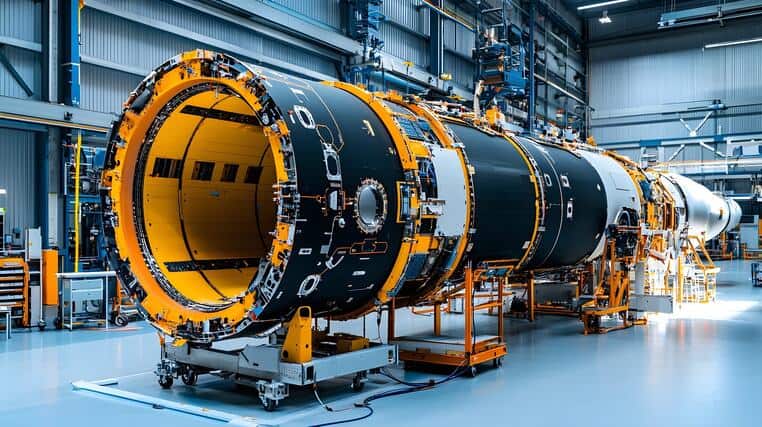
New and improved materials are changing how things are made and used across many industries. Advanced materials like ceramics, metal alloys, polymers and composites are being developed thanks to progress in science and technology. These innovative materials are bringing major changes and advancements to products from spacecraft to shop floors.
Lighter and Stronger Materials
One way advanced materials are creating change is by making products lighter while keeping their strength and durability. According to the experts at Axiom Materials, when something is lighter weight but still resists stress, wear and high temperatures, it performs better and uses fewer resources. For example, ceramic matrix composites provide the heat resistance of ceramic materials but are far lighter. This allows industries to design aircraft engines and space vehicle components that are lighter, faster, more fuel efficient, and use less fuel overall, saving on costs.
Materials Specialized for Harsh Conditions
In addition to weight savings, the newest materials bring specialized properties for operation in demanding environments. Materials engineers now manufacture metal alloys for use at ultra-high temperatures exceeding 1000°C and polymers that resist harsh chemicals or concentrated acids. New property combinations make it possible to optimize performance in extreme conditions. Industrial piping now lasts even longer against corrosion from substances flowing through them. The most advanced turbine blades in hot sections of engines can now withstand intense heat and stresses while operating at their limit. The robustness of advanced materials promotes innovation across sectors, pushing boundaries.
Broader Applications Across More Sectors
Initially, unique materials were produced exclusively by the military, space, and high-tech industries for their specialized uses alone. But ongoing materials science advancement allows transfer to commercial sectors that couldn’t access them before. For example, polymers designed for cutting-edge aerospace composites now reinforce some automotive parts, improving safety. Processing methods that once created exclusive materials in small quantities have improved to permit mass production at lower costs. From electronics to medicine to green energy, specialized materials open new possibilities.
Customization and Reduced Process Steps
Advanced materials also enable greater customization and more streamlined manufacturing. Instead of removing material for shaping, additive manufacturing (also called 3D printing) constructs components in ultra-fine layers based on digital models. This “bottom-up” approach offers flexibility in geometries impossible with conventional techniques. It also reduces work steps by consolidating parts, so there is less assembly afterwards. Rather than machining down from a block, components can be printed to specifications for lighter weight and superior performance. As well as this, no special tooling is required, accelerating innovation pace. As materials expertise advances, more industries can substitute traditional fabrication methods with additive techniques for customized components with enhanced properties.
New Recycling Techniques
An area that continues advancing is capabilities in recycling special materials, reducing waste. For example, thermoset polymers which formerly could not be remolded after initial shaping now have special decomposition additives allowing reuse. This allows recycling composite parts and 3D printed prototypes, decreasing environmental impact. There is also progress in removing coatings from used turbine blades to regain superalloy base materials. Improving recycling processes alongside creation of high-performance substances means the benefits compound across product lifecycles.
Conclusion
From heat shield tiles protecting spacecraft to molds and dies shaping automotive parts, advanced materials are changing the game. Ongoing science to engineer lighter, stronger and more resistant substances allows industries to push performance boundaries, operate in harsher conditions and explore new design spaces previously inaccessible. Yet there is always room for improvement; researchers continue to manipulate matter across nano-to-macro scales for increased functionality and capabilities. With human ingenuity driving innovations in materials, future products seem limited only by one’s imagination.