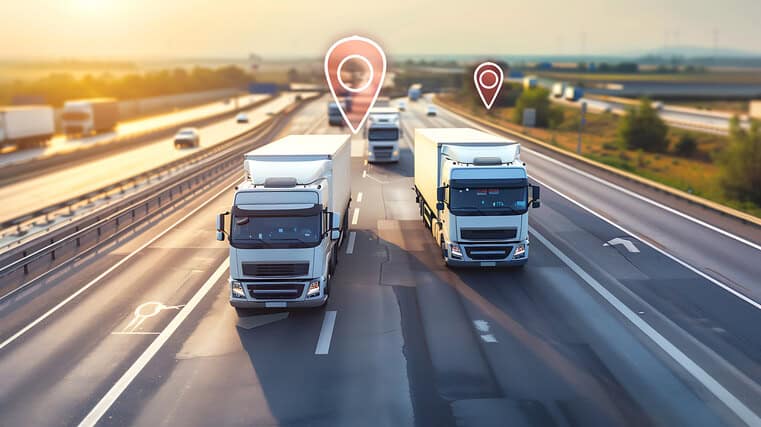
Company vehicles logging long hours on American highways face endless risks. Nevertheless, modern technology now tracks vehicles closely to improve fleet oversight. Detailed monitoring offers new transparency that boosts efficiency, accountability, and bottom lines dramatically while making roads safer.
Eyes on the Open Road
Fleet operators traditionally relied upon driver communications and periodic check-ins to estimate vehicle locations and conditions. However, limited visibility left huge information gaps. Where exactly are trucks beyond the last confirmed checkpoints? Do crews follow authorized routes or make unnecessary detours? With only sporadic updates available, any number of issues may go undetected for hours until eventually discovered. Reconstructing obscured sequences often proves difficult after the fact.
Fortunately, extensive monitoring platforms now fill information voids to pinpoint fleet vehicles constantly. Automated status pings reveal positions down to exact coordinates in real-time. Systems also confirm operational metrics like fuel economy, engine diagnostics, and duty status without relying on logs. All clusters of data finally answer the critical question: where are all vehicles at this moment?
Optimizing Logistics and Delivery
Expanded visibility enables logistics improvements that ripple through operations. Monitoring vehicle tracking patterns uncovers schedule adjustments to smooth transit times. Analyzing site arrival metrics also helps balance workloads across crews. Even reviewing hard braking incidents prompts proactive coaching that increases safety over time. According to the people at Idrive, comprehensive monitoring removes management blind spots to align assets better.
Streamlining Dispatch Decisions
Detailed positioning updates assist proactive dispatch operations as well. Streamlined routing dispatches the closest appropriate response vehicle without overtaxing individual resources. Real-time maps indicate equipment nearby to handle issues rapidly. Monitoring also prevents dispatching delayed vehicles still finishing prior calls, thereby improving on-time arrival rates. Essentially, dispatch leverages expanded visibility to align vehicle availability with service priorities seamlessly.
Reconstructing Incidents
While preventing accidents remains paramount, collisions still occur daily across U.S. highways. Detailed records allow reconstructing incident dynamics conclusively to assign fault accurately. Event data recorders diagnosis mechanical conditions and operations status at moments of impact automatically. Speed, heading, weather conditions and more, all contextually explain contributing factors beyond damage assessments. Most valuably, streaming telemetry corrects memory gaps that undermine crash inquiries. Reviewing tangible vehicle movements, forces and systems output overrides subjective accounts to uncover true sequences.
Deterring Problems
Likewise, the very presence of vehicle tracking systems deters problems proactively. Drivers stay attentive, knowing movements always remain documented. Following authorized routes and schedules also limits unauthorized detours and delays when trips are monitored constantly. Essentially, tracking visibility encourages positive habits that reduce violations and risks over extended periods through accountability.
Industry Adoption Accelerating
Large fleets, delivery services and authorities currently lead adoption using vehicle tracking widely. Nonetheless, decreasing costs now bring monitoring within reach of small/medium fleets to expand implementation further. Cloud-based administration requires no difficult hardware installations, while monthly fees fit limited budgets. At the same time, monitoring accuracy improves dramatically as cellular and GPS networks enhance. Fleet managers now quantify reduced accidents, faster response times, lower operating costs and larger profits. Better oversight promises safer roads plus protected bottom lines.
Conclusion
Modern fleet operation means managing many moving parts, both figuratively and literally, in terms of vehicle assets. New technology removes past barriers to visibility that caused communication gaps between administrators and remote trucks. Comprehensive real-time vehicle tracking fills these information voids to reveal precise positioning, regardless of location. Detailed monitoring provides managers increased transparency that enables data-driven logistics improvements. Optimizing dispatch coordination and deterring problems also contribute to systemic benefits over time. Fundamentally, expanded visibility unlocks fleet optimization potentials to improve safety, accountability, reliability, and bottom lines for transport operations small and large across America.
For more interesting posts visit my blog.